
FAC Insights: How can we achieve gender equality in dance music
FAC Insights is a forum for us to showcase and share long form pieces looking at various parts of the music industry and the society that shapes it. Pieces take the form of videos, interviews, discussions, articles and more.
This month, we’re thrilled to feature Martha Bolton, Founder & Director of NOT BAD FOR A GIRL as she highlights work of the organisation.
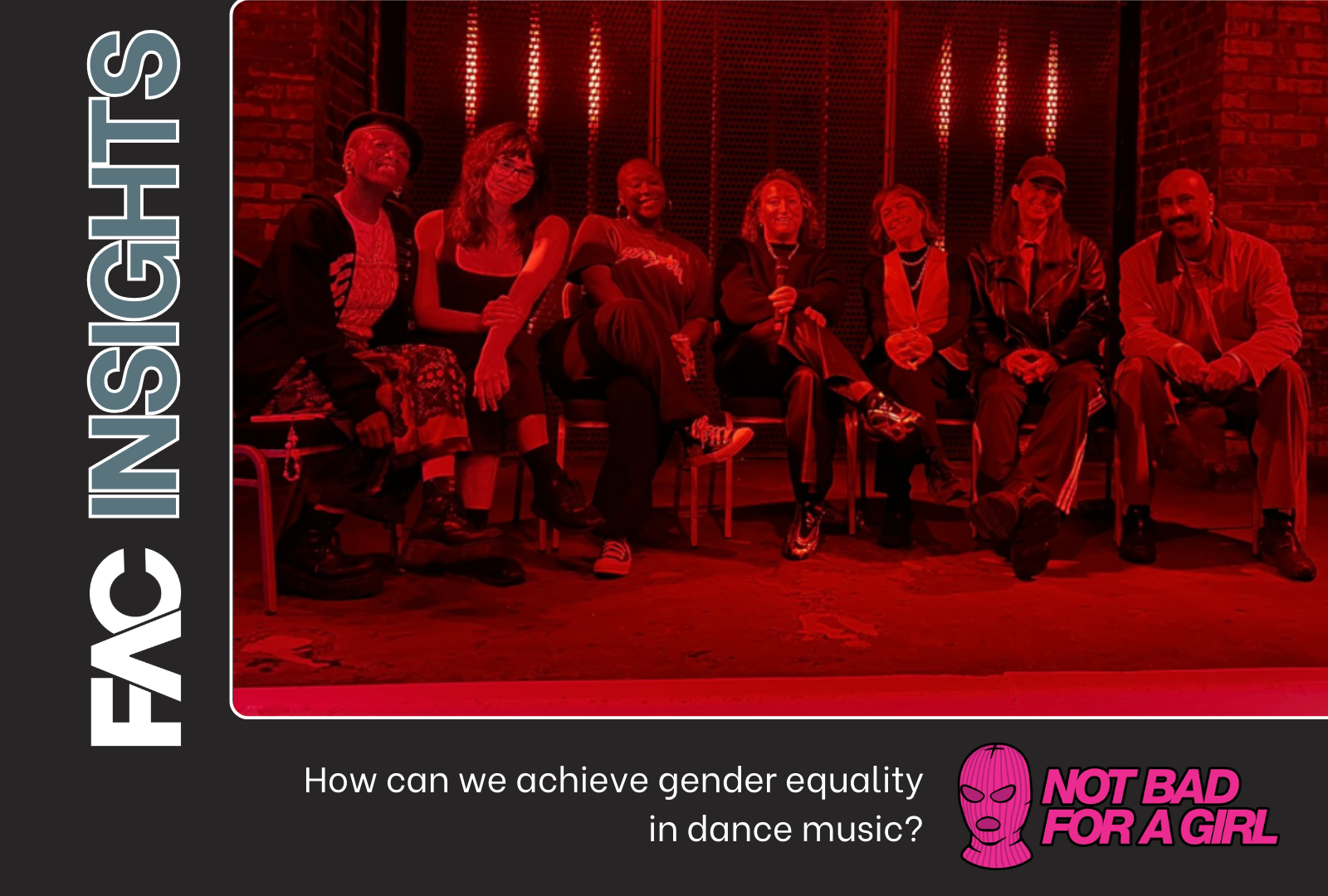
How can we achieve gender equality in dance music
by Martha Bolton, Founder & Director - NOT BAD FOR A GIRL
Sign our open letter to help support our work combatting gender inequality on line-ups: https://tr.ee/nbfg-open-letter
On a chilly evening at fabric nightclub late in 2025, I was lucky enough to be joined by some brilliant panellists to answer a question which drives everything we do at NOT BAD FOR A GIRL (NBFG). As Founder and Director of the DJ collective, grassroots platform and label, I know all too well the way gender impacts how myself and others experience the dance industry - I have seen it demonstrated throughout my career and hear about it from the NBFG community every day. Since 2018 our mission has been to combat gender discrimination and create opportunities for emerging artists while using our networks to loudly call out institutional injustice.
Luke Bryant
So in our latest effort to evolve the wider industry and galvanise thought leaders on the topic, it was my honour to bring together Matty Chiabi from Girls Don’t Sync, Keep Hush’s Collaborative Events Manager and performer Kate Hazeldine, Lead Booker for Outlook Festival Rishi Bagdai, Co-Founder of Trans Voices Coda Nicolaeff, LO-LOW who is the Founder of Soft Domination and SOAK Founder Bekefi to share their ideas on How We Can Achieve Gender Equality in Dance Music.
Here I’ll cover some of my key takeaways and underline the tangible actions that we came up with, which I hope to see more of in the coming year. You can also dive in and listen to the whole conversation below.
Matty kicked us off by speaking about how crucial having a close peer network is for her, especially when touring and DJing in nightclubs where her personal and psychological safety as a Black woman sometimes feels uncertain. This is something LO-LOW could certainly relate to, and Bekefi told of her own instances of being made to feel unsafe because of poor conduct by club promoters. Sadly this is not a rare experience, and one that Bekefi explained she’s now equipped herself against, via a clause in her touring contracts.
The way that Matty described her fellow Girls Don’t Sync members and management team as a support system resonates very much with me. NOT BAD FOR A GIRL was born out of friendship and we remain a group of mates first and foremost - being able to vent and share resources and opportunities with a common goal is so effective for breaking down industry barriers, something that Kate is keen to see more of.
From her events booking perspective at Keep Hush she says it’s really clear that equality doesn’t start with line-ups, it starts in the meeting rooms. Who’s booking? Who’s programming? Who’s running sound, marketing and management? If the same people are always making the calls, you’ll keep seeing the same artists being booked, no matter how “inclusive” the brand messaging is.
Rishi picked up on this point. From his festival booking standpoint, he has to scrutinise the way that line-ups have traditionally been conceived to avoid repeating the same patterns. He says he sees a reliance on the existing networks of agents, managers, bookers etc which have historically favoured men. And if you don’t actively interrogate those processes, nothing changes. Pressure on ticket sales or industry expectations can’t be an excuse.
At Outlook, they’ve started tracking gender representation across bookings, not as a marketing tool, but as a way to understand where they’re falling short, which I find so encouraging. After all, if you don’t measure your data, you can’t improve on it.
Next we moved to talking about steps that venues and promoters should be taking to ensure true inclusivity, an area especially crucial for Coda considering the additional barriers that trans and non-binary people face. Coda is clear that it’s not enough to book trans artists and call a space inclusive. Does the promoter have clear anti-harassment policies? Are staff trained? Are trans people being respected backstage and on the mic? Coda says that inclusion without safety is just a performance. You can’t invite trans people into unsafe environments and expect nothing but gratitude for giving them visibility.
LO-LOW made the point that dancefloors are complicated spaces. They can be incredibly liberating, but they can also be rife with exploitation especially for femme and queer bodies. She says there’s a lot of unspoken pressure around how women DJs and performers are expected to present themselves, therefore equality doesn’t mean removing sexuality from dance spaces, it means giving the artists control over how they’re seen and how they’re engaged with. Consent and true freedom of expression on the dancefloor isn’t just about the crowd, it’s about how artists are marketed, photographed, talked about, and booked.
I hope you enjoy the full discussion as much as I did, and to finish, here’s a summary of the clear steps I will continue to uphold with all the promoters, agents, venues, labels and artists I work with at NOT BAD FOR A GIRL:
True representation starts behind the scenes, among the decision-makers
Evolve your networks critically and with intention
Pay artists fairly and transparently
Don’t be shy in demanding professionalism and accountability from everyone you work with
Commit publicly to inclusion and respect policies
Prevention is best. Ensure safe spaces by training all staff (see Good Night Out for accredited training)
Implement robust response protocols and secure reporting systems
Learn more about NOT BAD FOR A GIRL here: linktr.ee/notbadforagirlmcr