
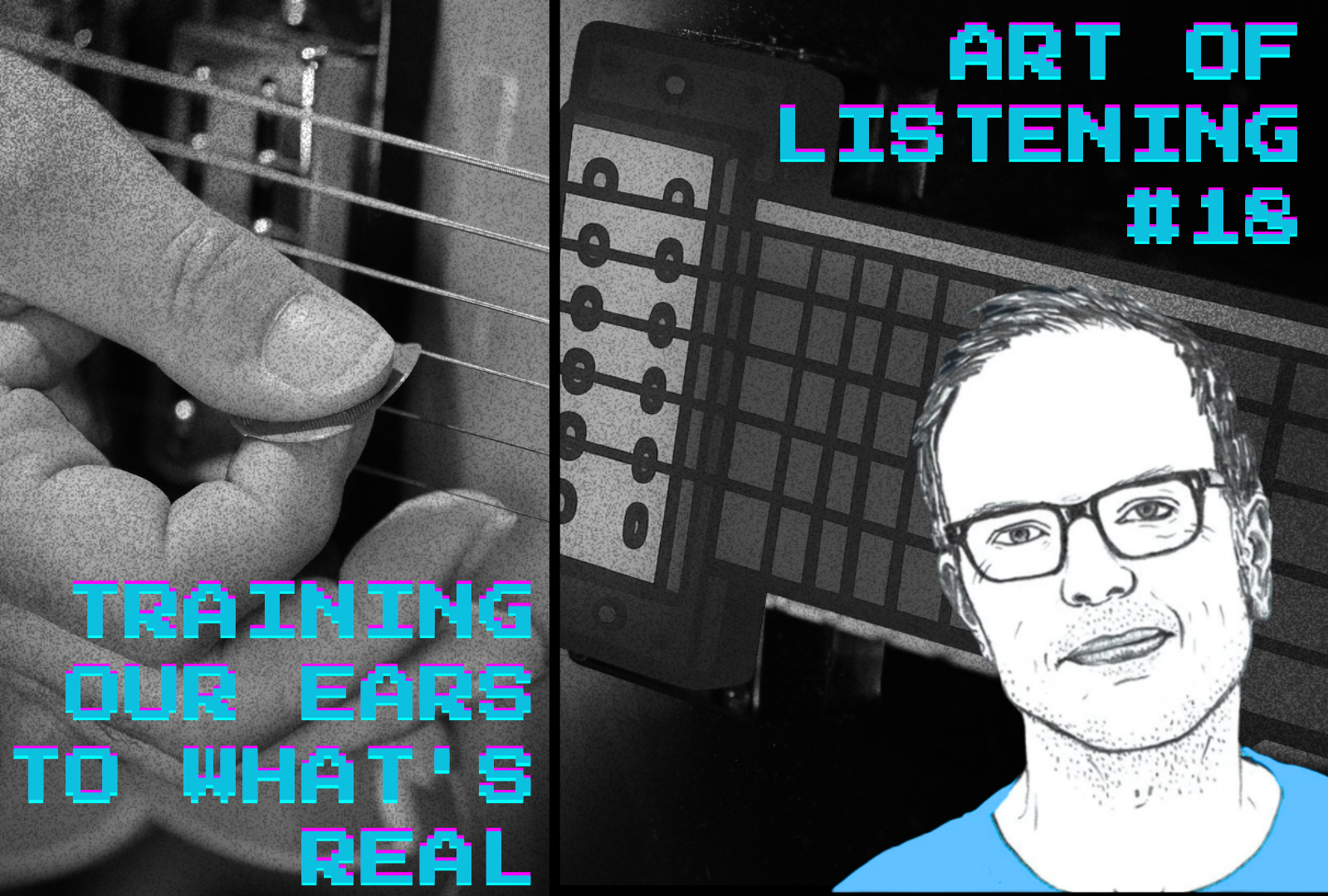
Art of Listening #18 with Keith Jopling
In this edition of The Art of Listening, Keith explores why mastery still matters in the age of AI. Drawing on insights from artist David Hockney, live music, and the emerging realities of AI-generated content, he argues that there is no substitute for craft, hard work and the human imperfections that give art its meaning.
His book, Riding the Rollercoaster: How Artists Survive the Music Business to Become the Legends We Love, is out now.
One of the few non-music artists I quote in Riding The Rollercoaster is the fine artist David Hockney, a colossus of the art world and a colossal loss to us all.
In the chapter Mastering the Craft, Putting in the Graft, I borrow Hockney’s quote “painting is harder than ideas”, meaning there is no substitute for the core skill at the heart of one’s creative pursuit. Hockney was open minded but still judged artists by how they could draw. He believed you have to be able to draw well and that artists who could not would always reveal themselves as flawed, no matter how many tricks they employed and “ideas” they could sell. Indeed, he could famously tell with near total accuracy which artists could draw well and which could not.
I’ve held this view about music all my life. It’s not snobbery, just appreciation. I like bands and artists who can play. 10,000 hours and all that. Every time I watch Glastonbury, I watch those sets a few times that stand out on this basis. It’s not difficult to tell which is which (though I suppose if you’re there, it’s different). When it comes to the Sunday afternoon legends slot, for example, there is an outstanding level of musicianship on display (although I did have to stop comparing everything I saw to Crosby, Stills and Nash at one point because the standard was simply too high for other bands to meet).
It applies to new bands just as much. A few weeks ago I went along to the launch party of new indie streaming service Cantilever (congrats to them). I couldn’t stay long, but caught the performance of the opening band, a trio from Manchester called Shaking Hand. The opening chord was a bit off and I almost left on the spot, but that would have been a mistake. As the band hit their stride it was obvious they had talent but even more apparently, they had practiced until their fingers bled. You could tell. I had a chat with the band’s lead vocal and guitarist George Hunter after their set, who told me he practiced non-stop for a year during lockdown. It showed.
Back to David Hockney, for all his glamour and celebrity, at the heart of his career was a morning-to-evening seven-days-a-week work ethic. There’s no substitute for work.
Except now there is of course: A.I.
Does all this mastering the craft and putting in the graft still apply in the world of AI? More than ever, I feel. But it’s a two-sided coin. If our favourite musicians keep their side of the bargain, we fans and listeners must keep ours too.
News just out revealed The Atlantic’s ‘AI Watchdog’ project has been interrogating four “giant datasets of songs that are being shared within the AI-development community”. The two biggest include 12m and 9m tracks respectively. The scale of AI training on musical works (copyrighted for most part and therefore in dispute but who knows about the outcome in today’s world).
The lawsuits will play out as they must, but on this occasion, copyright looks like a sturdy wall that may still not be able to totally block the sheer force of ‘slop’. Whichever way the law falls, it’s down to us to appreciate the work, the inputs, the graft and the results. Just as AI trains on songs, we need to train our ears to appreciate human creativity and work ethic more than ever. It’s possible.
Despite recent surveys suggesting many listeners cannot tell the difference, and that AI will only improve until this is inevitable anyhow, there are and will probably always remain some telltale signs that a song is AI (and in any case a likely legal requirement that it must be tagged as such).
An example is ‘transients’ - the initial, sharp bursts of sound at the very beginning of a note (a drum stick hitting a snare or a plectrum hitting a guitar string). Listen closely to the “attack” in a piece of music. Humans create sharp, distinct transients. Sometimes these are also (thrillingly) off time*.
Spot and identify the AI smoothing (AI generates music as a continuous stream of probabilities, it struggles with imperfection). AI drums and guitar picks sound rounded off, the attack is lacking. Again, this is something likely addressable by AI training, but there’s plenty more to listen out for.
And listen we must. Otherwise the tech bros will be laughing all the way to the bank, again.
__________
*The snap of Stewart Copeland’s snare on The Police’s Spirits In The Material World, a full quarter-second before the chorus kicks in, is one of the most thrilling pieces of pop music I have ever heard. AI would never think to do that. Would it?
Learn more about Keith Jopling:
Keith Jopling is a music strategist, author, podcaster and mentor. He has worked for IFPI, BPI, EMI, Spotify and Sony Music. In 2021 he started the music podcast The Art of Longevity.
He has published two books on music, business and culture:
Body of Work: how the album outplayed the algorithm and survived playlist culture (February 2026)
Riding the Rollercoaster: how artists survive the music business to become the legends we love (May 2026)
As an educator, he has lectured in music business, strategy and innovation at Henley Business School, NYU, BIMM, ACM, Belmont, Syracuse, Westminster and the University of Krems, Austria.