
Art of Listening #16 with Keith Jopling
In this edition of The Art of Listening, Keith explores why so many contemporary artists are turning back to the sounds and aesthetics of the 1970s. From Tyler Ballgame and RAYE to Olivia Dean and Michael Kiwanuka, he traces a growing movement toward analog warmth, live instrumentation and cohesive albums in response to today’s hyper-digital, streaming-driven music landscape. As artists seek timelessness in an era of algorithms, he asks what this revival says about the future of musicianship, storytelling and the album as an art form.
His book Body of Work: How the Album Outplayed the Algorithm and Survived Playlist Culture is out now.
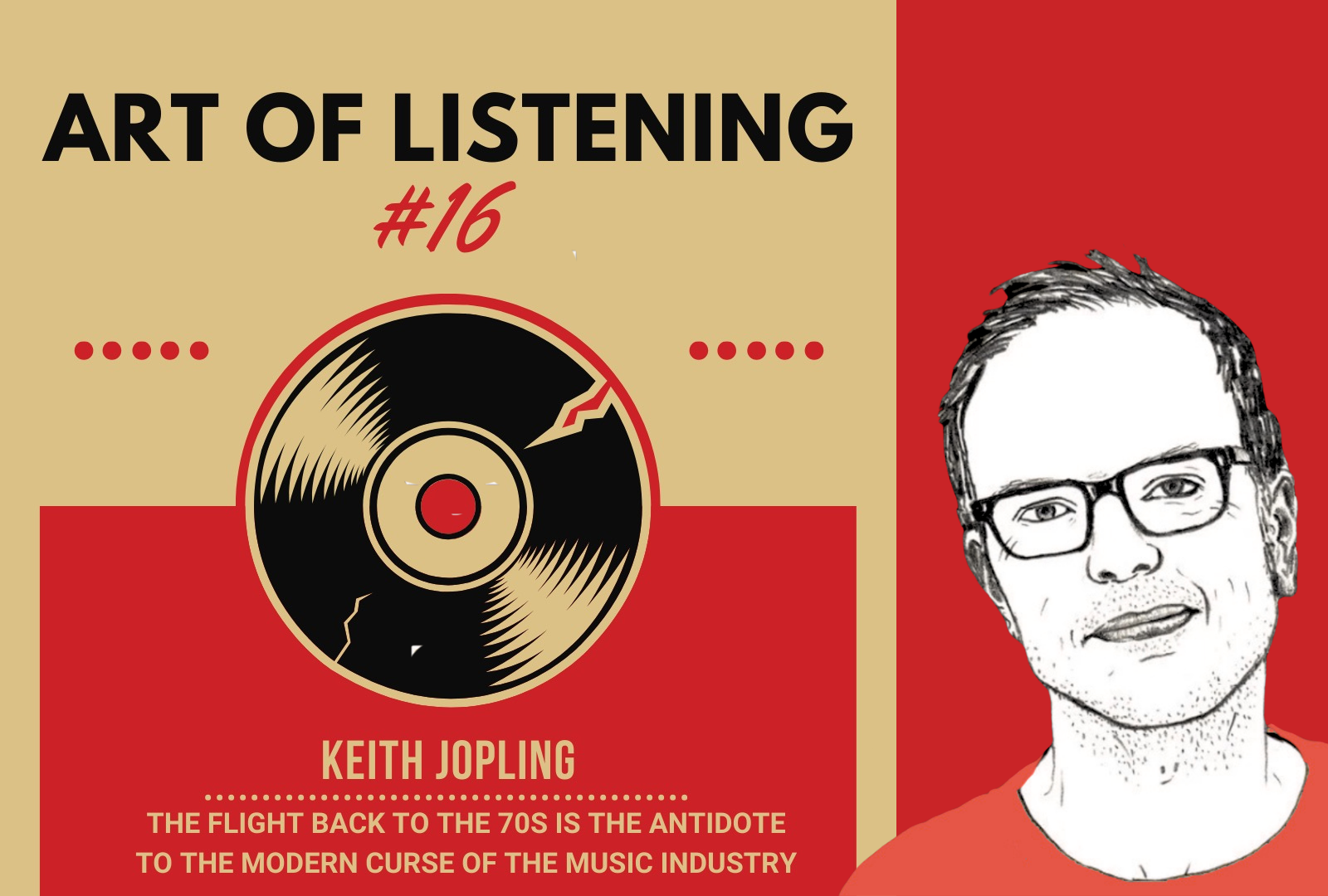
The flight back to the 70s is the antidote to the modern curse of the music industry
I’ve been giving the new Tyler Ballgame album a few listens, what a remarkable debut it is. Of course, it’s one of those “overnight successes" that is 10 years in the making, so I should not be altogether surprised. But what does strike me about the record is just how 70s it feels. His voice has been compared with Roy Orbison (among others). Back in the (actual) 70s, my mum played Orbison’s music a lot, so listening to For The First Time, Again (nice title) transported me right back into my childhood. Tyler Ballgame’s musical style is all over the place, and walks the line between retro revival and modern reinterpretation. The thing is, I keep on hearing this same idea more and more. It’s almost as if a whole swathe of modern day artists have rented a musical time machine and set the dial for “somewhere between 1970 and 1975”. Ballgame was born in 1987, but that’s the point. He can only really know what it might have been like back then by pretending to be there.
As a strategy for success, this time machine appears to work wonders. Raye is doing pretty well these days and yet her live shows are like an episode of (the original) Midnight Special (look it up). For that matter, another phenomenally successful recent career leap also smacks of throwback to the era of classic pop: Olivia Dean, whose warm, organic sounding The Art of Loving is reminiscent of later Motown, blended with soft rock and classic R&B. With live instrumentation and organic arrangements to the fore, the album’s got the 70s all over it.
I’ll stop listing the examples, but I could go on (Lana Del Rey, Weyes Blood, Leon Bridges, Michael Kiwanuka, okay stop, stop). I trace the resurgence back to Paolo Nutini’s comeback album Last Night In The Bittersweet, closely followed by Clairo’s breakthrough into the mainstream (what’s left of it) with Charm. Both embraced distinctly analog textures (again soft rock and/or blue-eyed soul inflections) all embellished with soft-lit Polaroid visuals. One of the most explicit recent homages to the ’70s was Bruno Mars and Anderson .Paak, whose An Evening with Silk Sonic project recreated the plush, orchestrated soul of mid-1970s Philadelphia. Again, this extended to the look: album cover art, typography, even the wardrobe department. My own favourite examples include Diane Birch, Laura Groves and now Jalen Ngonda.
But why are these modern/young solo artists going back in time? What drives this flight back to the ’70s is not simply an exercise in nostalgia or curiosity, nor a costume-party reenactment of flared jeans and lava lamps. Rather, it represents a deeper aesthetic shift: a renewed embrace of analog warmth, live instrumentation, great musicianship, cohesive albums, and visual identities rooted in the textures of the 1970s - a time when timelessness truly set in. Timelessness is the goal here, whether consciously or otherwise. To make something classic is to cut through the clutter of streaming abundance, social media transience and now the sludge fest cut and paste of AI. Across pop, R&B, indie rock, soul, and singer-songwriter traditions, contemporary artists are drawing consciously and unconsciously from the 70s’ sonic and visual vocabulary. The result is a hybrid form; modern in lyrical perspective and distribution (although vinyl provides an exact replica), but steeped in the musical DNA of a half-century ago. The 70s was the golden era for the “singer-songwriter” and so the above examples follow that tradition. But a similar trend can be found among rock bands - perhaps again because the 70s was the coming of age decade for the classic rock bands we worship today (perhaps more than we did then).
In David Adjmi stage play STEREOPHONIC, the frayed, fragile (and fictional but very recognisable) band members of a transatlantic rock band have spent over one year desperately trying to lay down the follow-up to a Billboard number one debut album (the play is set in 1976-77). Although Adjmi’s play is clearly “inspired” by Fleetwood Mac, you could insert any number of current bands to stage a fringe version of the play - Wolf Alice, The Last Dinner Party, The 1975, even Arctic Monkeys. All these bands strive for elements of retro rock grandeur. Their arrangements often feature expansive guitar textures, melodic bass lines, and an emphasis on band chemistry that echoes the era of album-oriented rock. While their lyrical themes reflect modern anxieties and cultural realities, the overall approach suggests an admiration for the scale and ambition of ’70s rock records. Beyond individual artists, the structural revival of the album as an art form mirrors 1970s practice. Vinyl sales have surged, and artists increasingly craft cohesive, front-to-back listening experiences. Gatefold sleeves, liner notes, and analog mastering techniques echo the era when the LP was not merely a container for singles but a complete artistic statement.
In a streaming-dominated landscape that encourages fragmented listening, this renewed focus on albums feels almost countercultural. But cultural nostalgia often operates on a roughly 40- to 50-year loop, meaning today’s musicians grew up immersed in their parents’ 1970s record collections. There is also a palpable fatigue with hyper-digital production: quantized drums, autotune vocals, and compressed mixes - the dreaded Spotify Core. Analog-inspired recording, by contrast, conveys warmth, imperfection, and human presence; an intimacy that digital precision lacks.
Visually, the 1970s provide fertile ground for identity-building in the social media era. Earth tones, flared silhouettes, vintage lenses, and hand-drawn typography translate well to curated Instagram feeds. Yet this revival is not merely aesthetic window dressing. It often corresponds with a deeper shift toward musicianship, collaboration, and the chemistry of bands playing together in rooms — practices central to 1970s recording culture.
The 1970s represent a period when albums were immersive, production was tactile, and genre boundaries were porous. By revisiting that ethos, artists are both escaping the present and enriching it. They are rediscovering textures, live interplay, embracing little mistakes and cohesive storytelling. All this feels vital in an age of algorithms and endless scroll. What might be interpreted by some as retro culture has been a big step forward for music.
Learn more about Keith Jopling:
Keith Jopling is a music strategist, author, podcaster and mentor. He has worked for IFPI, BPI, EMI, Spotify and Sony Music. In 2021 he started the music podcast The Art of Longevity.
He has published two books on music, business and culture:
Body of Work: how the album outplayed the algorithm and survived playlist culture (February 2026)
Riding the Rollercoaster: how artists survive the music business to become the legends we love (May 2026)
As an educator, he has lectured in music business, strategy and innovation at Henley Business School, NYU, BIMM, ACM, Belmont, Syracuse, Westminster and the University of Krems, Austria.